
Raising capital at an early stage is not primarily about convincing someone that your idea is good. It is about passing an evaluation process that is often implicit, structured, and highly constrained by risk and uncertainty.
Most early-stage founders focus on pitch decks, storytelling, or networking, without fully understanding how startups are actually reviewed, compared, and filtered by accelerators, programs, and other organizations.
This article explains how early-stage capital-raising processes typically work from an evaluation perspective, what criteria are commonly used, and how founders can prepare their startup to be assessed more clearly and consistently.
The goal is not to guarantee outcomes, but to reduce friction, misalignment, and avoidable rejection during early-stage evaluation processes.
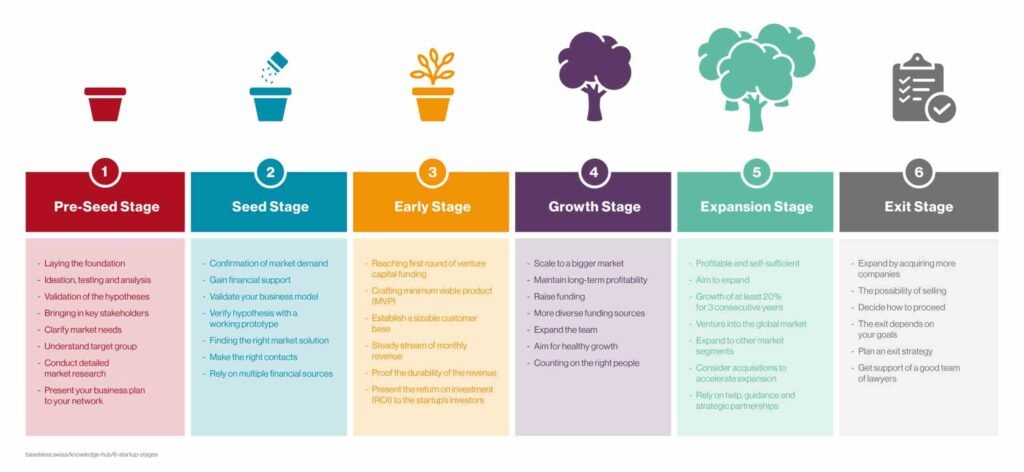
What “raising capital” really means at early stage
At the early stage, raising capital rarely follows a standardized or purely quantitative process. Decisions are made under limited information, high uncertainty, and strong time constraints.
In practice, this means your startup is not evaluated in isolation. It is evaluated relative to others, under a set of implicit criteria that aim to answer one core question:
Is this startup understandable, credible, and worth further attention at this stage?
Early-stage evaluation is not the same as later-stage analysis
Key differences:
- Limited or no historical data
- Incomplete or evolving business models
- Heavy reliance on qualitative signals
- Strong emphasis on team and market understanding
Founders often underestimate how much ambiguity evaluators are managing simultaneously.
How early-stage startups are typically evaluated
Core evaluation dimensions
Most early-stage evaluation processes focus on a combination of:
- Problem clarity – Is the problem well-defined and relevant?
- Market understanding – Does the team understand who the user is and why this matters?
- Team composition – Can this team realistically execute?
- Signals of progress – Any form of validation, learning, or traction
- Consistency – Do answers align across documents and conversations?
These dimensions are rarely scored explicitly, but they guide decisions.

Preparing your startup for early-stage evaluation
This is where the article becomes highly practical.
Clarify before you communicate
Before preparing a deck or filling out applications, founders should be able to clearly articulate:
- What problem exists
- Who experiences it
- Why current alternatives are insufficient
- Why this team is positioned to work on it
Lack of clarity here is one of the most common causes of early rejection.
Align your materials
Early-stage evaluation often involves multiple inputs:
- Application forms
- Pitch decks
- Intro calls
- Follow-up questions
Misalignment between these sources creates uncertainty and friction.
Common mistakes founders make at this stage
Over-optimizing narratives
Trying to sound “perfect” often reduces credibility.
Evaluators are generally more comfortable with:
- Acknowledged unknowns
- Clear assumptions
- Transparent constraints
Saying there is no competition
Claiming to have no competition usually signals poor market understanding.
Treating evaluation as persuasion
Early-stage evaluation is less about persuasion and more about signal clarity.
How accelerators and programs fit into this process
Accelerators and incubators act as structured filters.
They typically evaluate:
- Team readiness
- Learning velocity
- Alignment with program focus
- Ability to benefit from structured support
A practical checklist before entering evaluation processes
Early-stage readiness checklist
- Problem clearly defined
- Target user identified
- Team roles understood
- Key assumptions stated
- Materials internally consistent
This does not guarantee selection, but it significantly reduces avoidable rejection.
Conclusion
Raising capital at an early stage is fundamentally an exercise in clarity under uncertainty.
Founders who understand how evaluation processes work, and prepare accordingly, are better positioned to navigate accelerators, programs, and other selection-based mechanisms without over-optimizing or misrepresenting their startup.