
Application forms are one of the most common — and underestimated — parts of early-stage startup evaluation.
Founders often treat them as administrative steps, when in reality they function as structured filters designed to surface clarity, consistency, and reasoning.
This article explains how evaluators interpret difficult or ambiguous questions, and how founders can respond without over-optimizing or misrepresenting their startup.
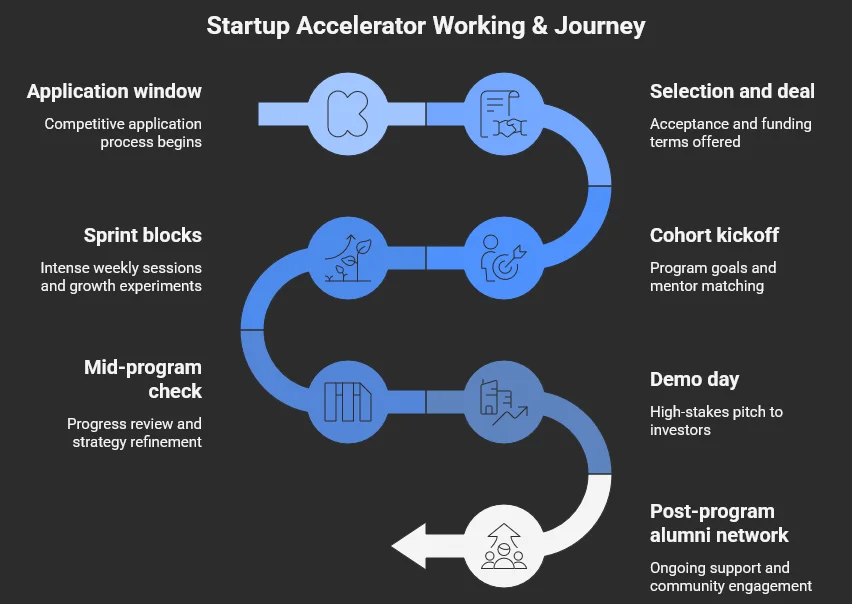
Why application questions feel difficult
Many questions are difficult because:
- the startup is still evolving,
- the answer is uncertain,
- or the question assumes a later-stage structure.
This is normal in early-stage processes.
How evaluators read your answers
Evaluators are usually assessing:
- clarity of thought,
- reasoning process,
- internal consistency,
- awareness of uncertainty.
They are rarely expecting “perfect” answers.
Common difficult questions and how to approach them
“Who is your competition?”
Avoid saying “we have none.”
Instead:
- explain current alternatives,
- describe user behavior today,
- clarify how you are different.
“What are your key metrics?”
If metrics are limited:
- explain what you are measuring,
- explain why,
- show learning intent.
“What makes your team uniquely suited?”
Avoid generic claims.
Focus on:
- relevant experience,
- decision-making roles,
- ability to execute and adapt.
What to do when a question does not apply
Do not leave it blank.
Instead:
- explain why it does not apply yet,
- describe what you expect to learn,
- show awareness of the gap.
This signals maturity, not weakness.
Common mistakes founders make
Over-optimizing answers
Trying to sound “ideal” often reduces credibility.
Inconsistency across answers
Contradictions across responses raise red flags.
How application forms connect to the broader evaluation process
Forms are rarely evaluated alone.
They are compared against:
- pitch decks,
- interviews,
- follow-up materials.
Read: How to Raise Capital for an Early-Stage Startup
Conclusion
Answering difficult application questions is less about having the right answer and more about demonstrating clarity, reasoning, and self-awareness.
Founders who understand this tend to navigate early-stage evaluation processes more effectively.